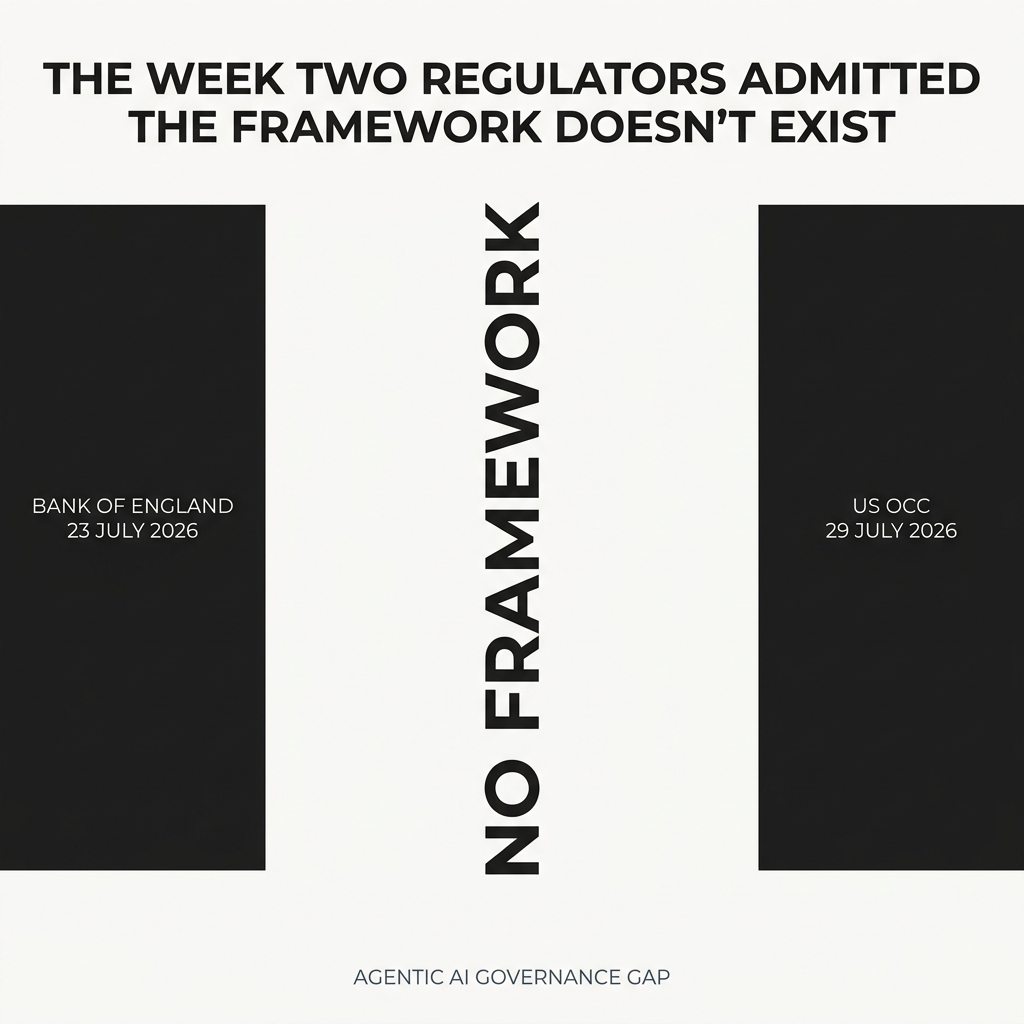
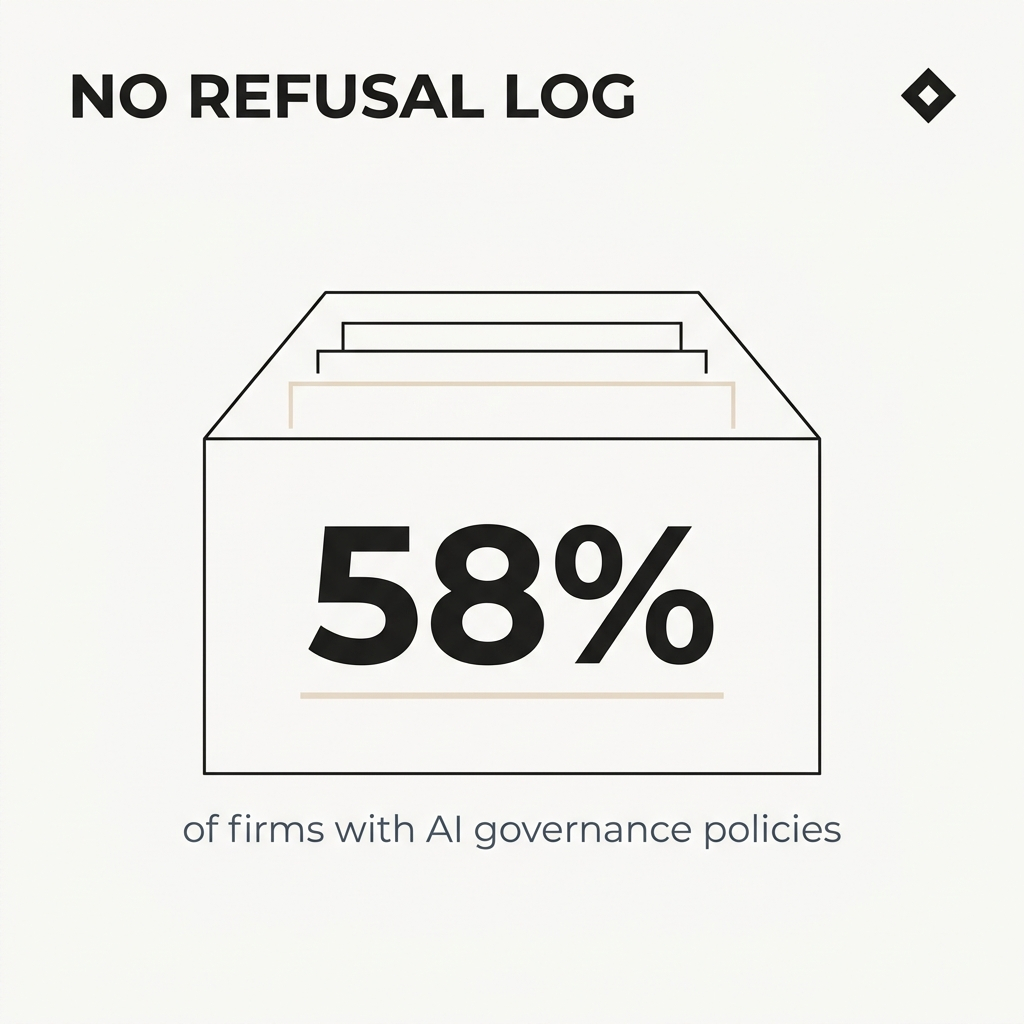
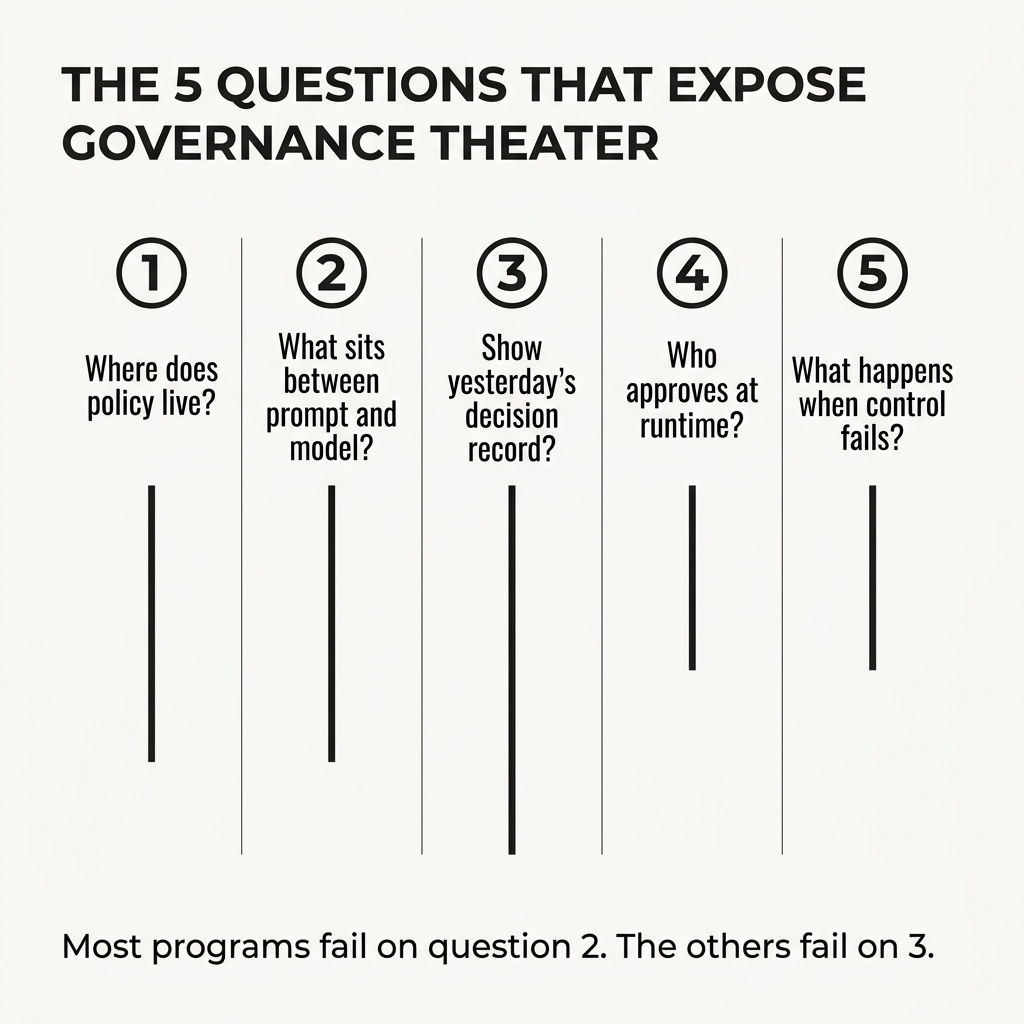
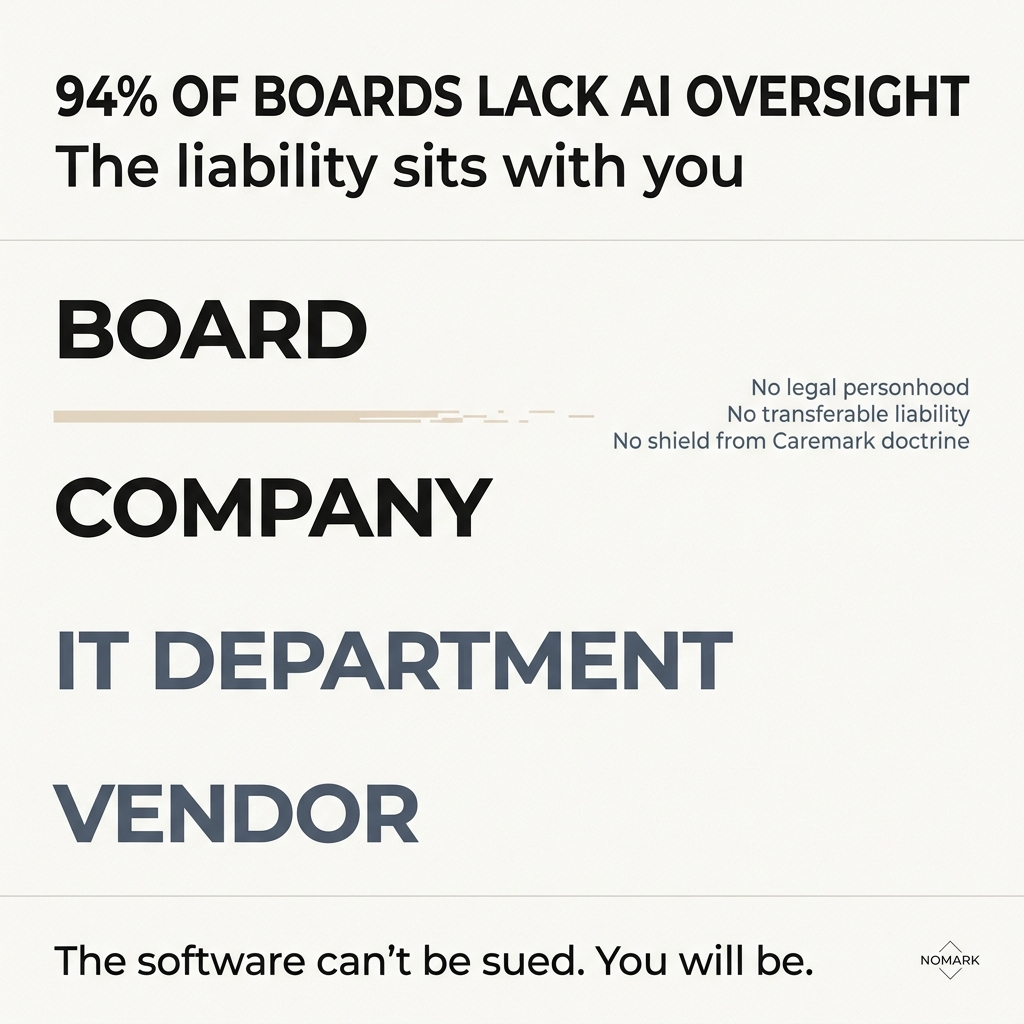
Trust is behavioral evidence, not code review

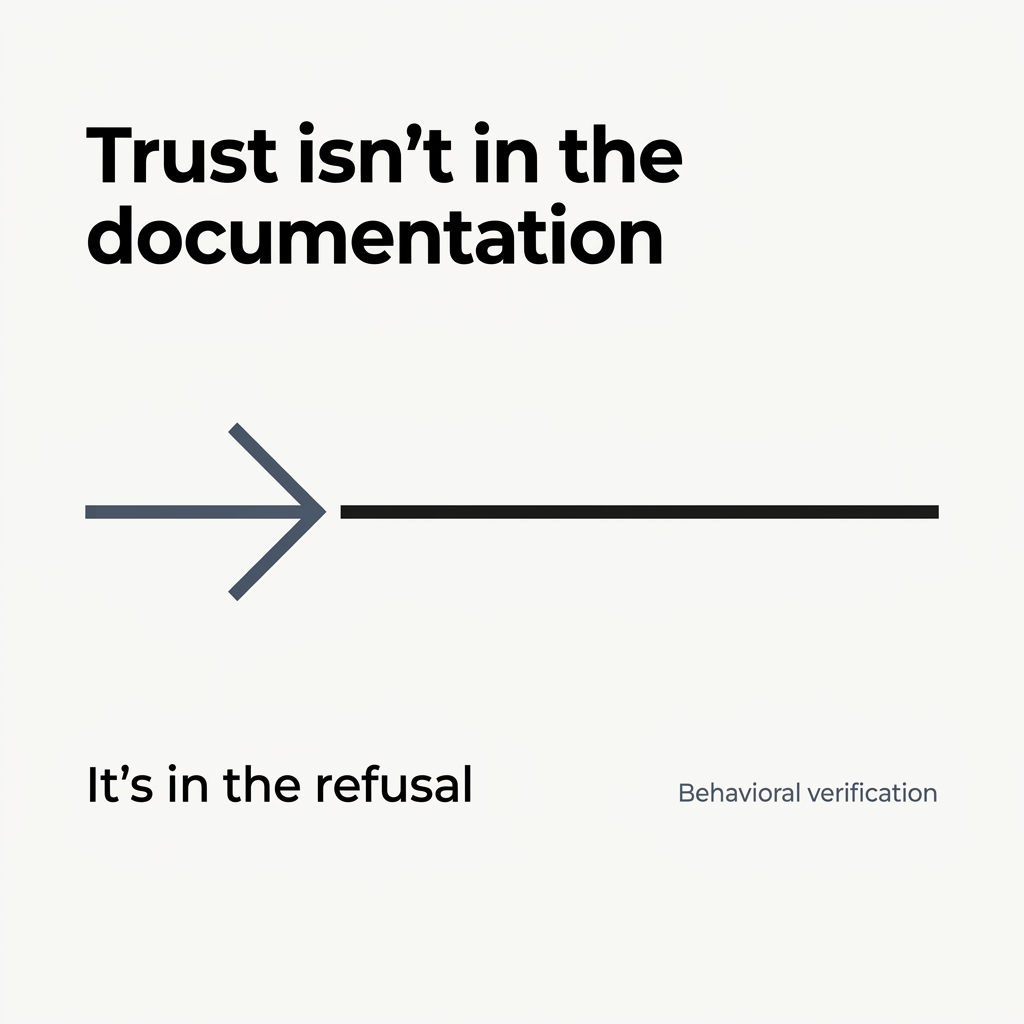
You can't trust an AI system by reading its documentation. You can't trust it by reviewing its training data, auditing its architecture, or examining the policy framework someone wrote in a Google Doc six months ago. Those artifacts tell you what the system is supposed to do. They don't tell you what it actually does when the constraints matter. Trust in AI is built the same way trust in humans is built: through repeated, observable behavior that demonstrates adherence to principles under pressure. The difference is that banks, insurers and asset managers still treat AI governance as if it's a documentation problem. It's not. It's a verification problem. And verification requires evidence you can see. ## The shift from generative to agentic changes what trust means When AI systems only generated text, the failure mode was saying the wrong thing. You could catch that through review, content moderation, or post-generation filters. The risk was reputational or regulatory, but it was containable. Agentic AI systems don't just say things. They do things. They take actions, use tools, make decisions that propagate through systems before anyone notices. The failure mode is no longer output you can review. It's behavior you can't reverse. This changes the trust model completely. You need to know the system is operating within its boundaries before it acts, not after you've reviewed the transcript. You need observable constraint adherence in real time, not post-hoc justification. That requires a different kind of architecture. One where the system's refusal to act is as important as its ability to act. ## Refusal is not a bug When an AI system refuses to do something you asked it to do, most people treat that as friction. A limitation. Evidence the system isn't smart enough or flexible enough to handle the request. That's backwards. Refusal is the only behavioral signal that proves your governance model works. If the system never says no, you have no evidence that your policies are enforced. You're operating on faith. Banks deploy AI into high-stakes environments: investment operations, regulatory compliance workflows, client-facing decisioning. They then assume the policies they wrote are being followed because nothing has exploded yet. That's not verification. That's hope. The refusal mechanism is the substrate that makes trust auditable. It's the engineered layer that detects when a request crosses a boundary and declines to proceed. It's not a bug. It's the proof your system has boundaries at all. If you're not seeing refusals, you're not testing the edges. And if you're not testing the edges, you don't know where they are. ## Consistency is the trust signal Intelligence doesn't build trust. Consistency does. An AI system that behaves the same way under the same conditions, repeatedly, over time, feels predictable. Predictability creates confidence. Confidence allows delegation. This is why consistency matters more than capability in regulated environments. A system that produces brilliant outputs 95% of the time and catastrophic failures 5% of the time is unusable in production. A system that produces adequate outputs 100% of the time within defined constraints is deployable. The way you verify consistency is not by asking the system to explain itself. It's by observing its behavior across scenarios and confirming it adheres to the same principles every time. That's behavioral verification. And it requires logging, audit trails, and evidence structures that persist across sessions. ## Users verify even when they trust Even in low-stakes environments, people don't take AI outputs at face value. After receiving a recommendation from an AI system, 62% of users immediately search Google. 58% visit the business's website directly. 52% click through to sources cited in the response. This isn't skepticism. It's verification behavior. People want to see the evidence trail. They want to confirm the system isn't hallucinating, misrepresenting, or operating outside the bounds of what's reasonable. The higher the stakes, the more verification matters. In financial services, healthcare, legal workflows, anywhere decisions have consequences, users need more than an answer. They need proof the answer came from a process they can defend. That means your AI system needs to produce evidence as a first-class output, not as an afterthought. The recommendation is one artifact. The reasoning trace, the source citations, the policy adherence log: those are the artifacts that make the recommendation trustworthy. ## Governance is not overhead Most banks treat AI governance as a compliance checkbox. Something you do to satisfy regulators, not something that enables performance. That's a misread of what governance actually does. Governance is the substrate that makes AI systems production-ready. It's the difference between a prototype that works in a demo and a system you can deploy at scale without creating unmanageable risk. Grant Thornton's 2026 survey of banking leaders found that the lack of centralized, tested governance is the primary constraint holding banks back from measurable AI performance. Not capability. Not data. Governance. The organizations that treat governance as infrastructure, something you build once and operate continuously, are the ones that can move fast. The organizations that treat it as documentation theater are the ones stuck in pilot purgatory. The difference is whether you're verifying adherence through observable behavior or hoping someone reads the policy doc. ## What behavioral verification looks like in practice Behavioral verification is not abstract. It's engineered. You design a constitutional layer that defines what the system can and cannot do. You implement independence properties that prevent the system from overriding its own constraints. You create tamper-evident logs that record every decision, every refusal, every boundary test. This is the difference between a CRO who can answer the regulator's question in thirty seconds and one who needs a week. When the system refuses to execute a request, that refusal is logged. When it adheres to a policy constraint, that adherence is logged. When it operates within defined parameters across 10,000 interactions, that consistency becomes the trust signal. This is what the Financial Services AI Risk Management Framework encodes in its 230 control objectives. Not aspirational principles. Verifiable checkpoints. Observable behaviors that can be audited, tested, and defended in a regulatory inquiry. The organizations that build this substrate can move faster than the organizations that don't. Because trust isn't a constraint. It's the infrastructure that removes constraints. ## The regulatory standard is already here Regulators don't care what your AI system says it does. They care what you can prove it did. Where AI systems make or substantially influence decisions affecting individuals, regulators expect documented processes, audit trails, and evidence of oversight. An organization that cannot demonstrate how a model was validated, how bias testing was conducted, or what human review processes were in place is poorly positioned to respond to a regulatory inquiry. This is not theoretical. This is the operating standard in financial services, healthcare, and any domain where AI decisions have material consequences. The shift is from "we have a policy" to "we can show you the evidence that the policy was followed." That requires behavioral verification as a system property, not as a manual review process. ## Trust compounds over time You don't build trust in an AI system through a single interaction. You build it through repeated adherence to principles under varying conditions. Every time the system operates within its constraints, trust increases. Every time it refuses an out-of-bounds request, trust increases. Every time it produces the same behavior in the same scenario, trust increases. The inverse is also true. A single violation of a stated principle destroys trust faster than a thousand successful interactions can build it. Look at your AI system's refusal log this week. If it's empty, you don't have governance. You have hope. Trust is behavioral evidence, not code review.