Honest bad news: writing leadership updates that don't lie
Most status updates are designed to protect the sender. Ours are designed to inform the reader.

TL;DR: Status updates fail when they protect the sender instead of informing the reader. Lead with bad news first, state it plainly, and pair every blocker with clear options. Honesty builds trust faster than hedging ever will.
What You Need to Know
- Most updates bury bad news to manage feelings, not enable decisions
- Lead with the worst true line first, no softening clauses
- Pair every blocker with specific options and a recommendation
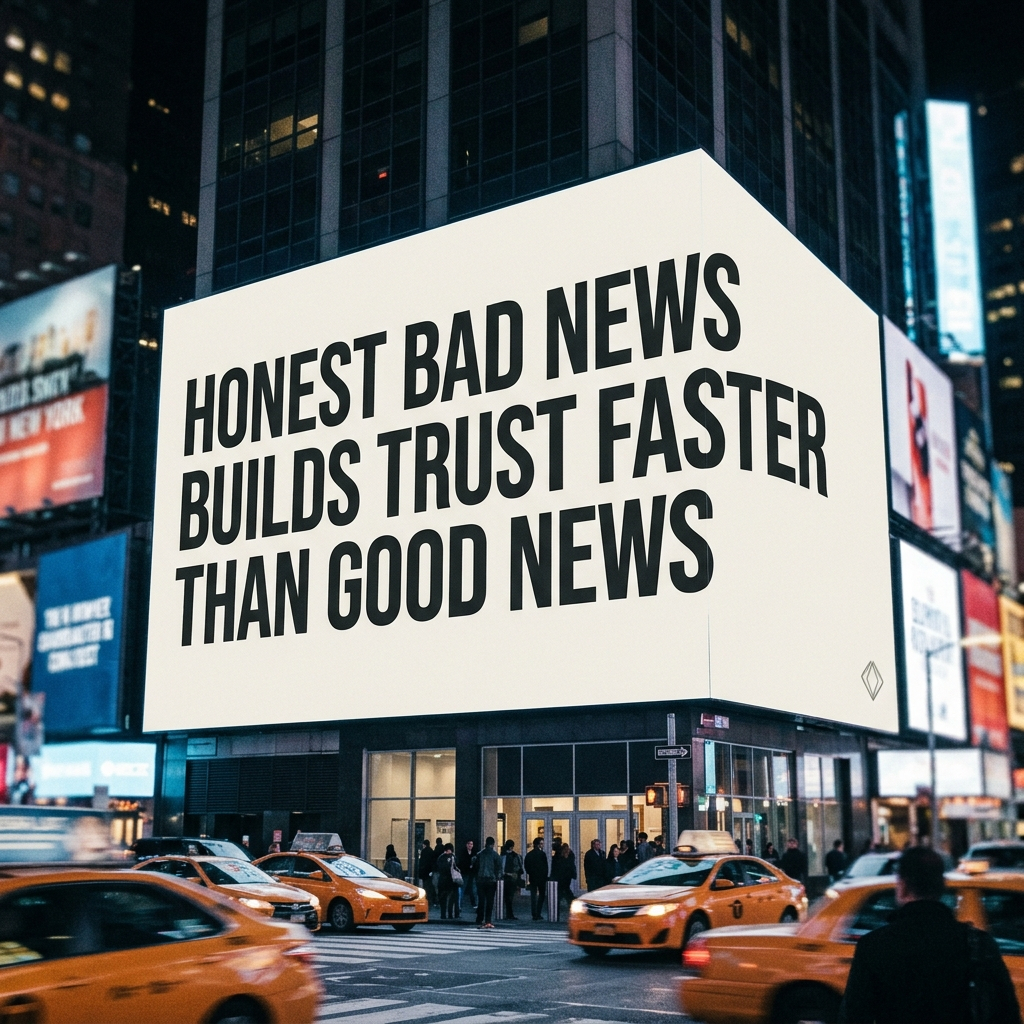
- Honest bad news builds trust faster than good news
- Test: Would the reader decide differently if they knew what you know?
Why Status Updates Lie
Most status updates manage feelings instead of informing decisions.
The blocker gets buried three paragraphs down. The slip becomes a "minor timing adjustment." The line that should read "I need a decision from you by Thursday" never appears.
We write them the other way around. Every update leads with bad news, states it plainly, and pairs every blocker with options for clearing it.
Updates lie because of incentives, not malice.
The person writing gets graded on the update itself. So they optimize the update while the project suffers. A slip becomes a "minor timing adjustment." A risk that should stop the room becomes "something we're monitoring closely."
None of this is technically false. All of it is arranged so the reader feels better and knows less.
The cost lands on the reader. You cannot act on what you cannot see.
A blocker buried three paragraphs down delays decisions by a week. The update served the sender and failed its only real job: informing a decision.
Key point: When updates optimize for sender comfort, they sabotage reader action.
How to Lead with Bad News
Invert the order. Open with what the reader needs to act, which is almost always the bad news.
State it in one sentence with no softening: "We will miss Thursday's date."
Then immediately give options, because a blocker without options is a complaint. A complaint is not an update.
"We have two paths: cut scope and hit Thursday, or hold scope and move to Tuesday. I recommend the first."
That sentence turns "I'm stuck" into a decision the reader can make.
What This Looks Like in Practice
We hold our own systems to this literally.
When an agent in the NOMARK harness fails the same approach twice, the protocol is not to try a third time and report progress. It stops and writes a blocked entry: the reason in plain words, routed to whoever clears it.
Not "still investigating." Not "should be resolved shortly."
Blocked, why, and who decides. The session record requires the honest bad line.
An update is not a performance. It is an instrument for someone else's decision.
The audit at the end of every session works the same way. A claim that something is done gets checked against actual output that proves it.
Saying "done" without evidence is not a rounding error. It is a graded breach.
The whole structure is arranged so the comfortable lie costs more than the uncomfortable truth. This is the only arrangement under which people reliably tell the truth.
Key point: Structure your system so honesty costs less than hedging.
Why Honesty Builds Trust Faster
Honest bad news builds trust faster than good news does. Counterintuitive, but measurable.
A sender who tells you the bad thing plainly, early, with options becomes someone you stop double-checking.
Hedging does the opposite. It trains the reader to translate everything you write. They assume the real status is worse than your words. They spend time finding out how much worse.
That tax gets paid on every future update, not only the one that hedged.
Key point: Hedging creates a translation tax that compounds across every future update.
The Single Test for Honest Updates
There is one test for whether an update is honest:
Would the reader make a different decision if they knew what you know?
If the answer is yes and you left it out, the update lied by omission. That counts.
Lead with the worst true line in the document. Especially when it is the line you would most like to bury.
Frequently Asked Questions
What if the bad news will upset stakeholders?
Upset now beats betrayal later. Stakeholders get more upset when they find out you knew about problems and stayed quiet. Early honesty preserves trust.
How do I deliver bad news without sounding incompetent?
Pair the blocker with options and a recommendation. "We will miss Thursday" sounds like failure. "We will miss Thursday. We have two paths: cut scope or move to Tuesday. I recommend the first" sounds like leadership.
Should I really lead with bad news in every update?
Lead with what the reader needs to act. That is almost always the blocker, the risk, or the decision you need from them. Good news goes second because it does not require immediate action.
What if I am still investigating the problem?
Say that, but make it specific. Not "still investigating." Instead: "Blocked on database performance. Testing three fixes today. Will know by 3pm which one works." Give the reader a timeline and next step.
How do I avoid sounding negative all the time?
You're not being negative. You're being useful. There's a difference between pessimism and precision. Readers remember the person who helped them make good decisions, not the person who made them feel good before surprises landed.
What if my manager prefers softened language?
Test it. Send one update with the bad news buried and softened. Send another with it up front and paired with options. Ask which one helped them make a decision faster. Let results do the persuading.
How often should I send updates?
Send updates when there is new information that changes what the reader should do. Frequency matters less than signal. A weekly update with no new blockers wastes time. A same-day update about a new risk saves weeks.
What if the bad news is my fault?
Own it in one sentence, then move to options. "I miscalculated the database load. We will miss Thursday. Two paths forward: cut scope or move to Tuesday. I recommend the first." Accountability paired with solutions builds more trust than excuses.
Key Takeaways
- Lead with the worst true line in every update. Bad news first, stated plainly, with no softening clauses.
- Pair every blocker with specific options and a recommendation. Blockers without options are complaints, not updates.
- Test every update with one question: Would the reader decide differently if they knew what you know?
- Honest bad news builds trust faster than good news because it proves you will not hide problems.
- Hedging trains readers to translate your words and assume things are worse than stated. That tax compounds across every future update.
- Structure your systems so honesty costs less than hedging. Make the comfortable lie more expensive than the uncomfortable truth.
- Updates exist to inform decisions, not manage feelings. If the reader feels good but knows less, the update failed.